
Meeting AI regulation small business Atlanta 2026 compliance requires owners to perform mandatory bias audits, provide clear applicant notices, and conduct thorough risk assessments for all automated systems. These measures are now essential following the 2026 rollout of strict state laws and federal updates like the Small Business AI Advancement Act. Staying legal also involves maintaining a complete inventory of AI tools to satisfy disclosure requirements and ethical best practices.
As an Atlanta business owner, you likely adopted AI tools to gain a competitive edge, yet the fear of shifting legal goalposts remains a constant source of anxiety. The regulatory landscape for 2026 is no longer a distant concern; it is a complex reality involving federal oversight, Georgia state mandates, and international standards that apply far beyond our city limits. Ignoring these shifts risks aggressive enforcement from the FTC or unintended violations of the Small Business AI Advancement Act. This guide outlines exactly how the upcoming AI Governance Study Committee affects your local operations. You will learn to navigate the cross border legal trap, manage HR bias audits, and execute a practical five step compliance checklist to ensure your business remains both innovative and legally sound.
The New Era of AI Regulation in Atlanta: Why 2026 is the Turning Point
The "wild west" era of artificial intelligence, characterized by rapid adoption without oversight, has come to a definitive end. In 2026, AI has completed its transition from a high-tech novelty to a regulated utility, integrated into the core infrastructure of modern commerce. For local entrepreneurs, mastering AI regulation small business Atlanta 2026 compliance is no longer a forward-looking goal; it is a fundamental requirement for daily operational stability.
The current legal landscape for Atlanta business owners is defined by a complex compliance patchwork. This environment is formed by the overlapping intersection of federal mandates, evolving Georgia state policies, and international standards that reach across borders. The time for claiming ignorance regarding algorithmic outputs or data handling has passed. As regulatory bodies across all levels of government activate new enforcement measures, the reality is that automated innocence is officially over.
These new measures target specific areas such as deceptive marketing, "AI-washing," and hidden bias in automated systems. Navigating this shift requires professional guidance in prompting and strategic implementation to ensure your technology stack remains an asset. Atlanta businesses must now move beyond experimental use and adopt rigorous standards to survive this new regulatory climate.
Federal Enforcement: The FTC Crackdown and the Small Business AI Advancement Act
The federal landscape in 2026 is anchored by the Small Business AI Advancement Act (H.R. 3679). This legislation provides a structured framework for small firms to integrate these technologies while maintaining strict accountability. For Atlanta entrepreneurs, this shift necessitates professional guidance in prompting to ensure that the outputs used in commercial settings are accurate and traceable. The Act signals that federal support for AI adoption is contingent upon the business's ability to demonstrate a clear understanding of the tools they use.
Simultaneously, the Federal Trade Commission (FTC) has intensified its enforcement through Operation AI Comply. This initiative focuses on the growing problem of AI-washing, which is the practice of making deceptive claims about the capabilities or presence of artificial intelligence in a product. The FTC is now actively fining companies that use AI to generate fake reviews or publish deceptive marketing materials. For a local business owner, navigating AI regulation small business Atlanta 2026 compliance requires a rigorous audit of all outward-facing claims to ensure they are grounded in reality rather than algorithmic hype.
The financial penalties for non-compliance are severe; current enforcement actions typically result in fines ranging from $1,000 to $10,000 per violation. These penalties apply specifically to businesses using AI for social media content or advertising without proper disclosure. If an automated tool generates a series of social media posts that include deceptive testimonials or unsubstantiated performance claims, the cumulative fine can be devastating for a small enterprise. Federal regulators have moved beyond mere warnings; they are now utilizing these penalties to enforce transparency across the digital marketplace, ensuring that consumers are not misled by automated content.
Georgia State Laws: What the AI Governance Study Committee Means for You
While federal agencies set the broad boundaries, the local landscape is being shaped by the Georgia AI Governance Study Committee. This legislative body is actively examining how automated systems influence the state economy, with a specific focus on retail, e-commerce, and political transparency. While Georgia already mandates specific disclosures for AI-generated political advertising, the committee is now turning its attention toward general commercial applications.
One of the primary concerns for Atlanta entrepreneurs is the committee's scrutiny of dynamic pricing. This involves using algorithms to set different price points for different customers based on real-time data or behavioral profiles. If your e-commerce platform or service business uses AI to fluctuate pricing based on a user's perceived willingness to pay, you are operating in a high-priority area for state regulators. Transparency in these transactions is becoming a non-negotiable standard for maintaining legal standing.
Current discussions indicate that Georgia is moving toward a more defined regulatory framework slated for late 2026. This framework will likely include mandatory disclosure requirements for any AI interaction that significantly impacts consumer financial decisions. To stay ahead of these shifts, local owners should invest in AI training for small business employees to ensure that staff can identify which tools fall under these emerging definitions.
The state's goal is to balance innovation with consumer protection; however, the burden of transparency remains on the business owner. Navigating AI regulation small business Atlanta 2026 compliance requires staying informed on these committee recommendations, as they will form the basis for upcoming state enforcement actions. If your business utilizes automated decision-making for customer-facing transactions, the time to document your processes is now.
The Cross Border Trap: How Out of State Laws Affect Your Georgia Business
A physical office in Buckhead or Midtown does not insulate your business from the stringent regulations of other states. If your Atlanta-based enterprise employs remote staff in Denver, sells to consumers in Los Angeles, or recruits talent in Chicago, you are bound by those specific jurisdictions. The reach of interstate commerce means that mastering AI regulation small business Atlanta 2026 compliance requires a legal strategy that looks far beyond Georgia’s borders.
Colorado’s Artificial Intelligence Act (CAIA), taking full effect in June 2026, is a primary example of this cross-border reach. This law prohibits the use of AI systems that result in algorithmic discrimination in high-stakes areas such as recruitment, promotion, and discharge. If an Atlanta firm uses an automated tool that affects a Colorado resident, the firm must conduct annual impact assessments and report any discovered discrimination within 90 days. Similarly, California’s FEHA and CPPA regulations now mandate four-year data retention for AI-driven decision-making processes. This creates a significant administrative burden for firms used to shorter data purge cycles.
For HR departments, the standard for fairness is no longer a matter of subjective opinion; it is now a mathematical calculation. New York City’s Local Law 144 has emerged as the de facto national standard for bias audits, even for companies outside of New York. It utilizes the Four-Fifths Rule, which flags an algorithm for disparate impact if the selection rate for a protected group is less than 80 percent of the rate for the highest-performing group. Atlanta businesses using automated employment decision tools to screen resumes must ensure their tools meet this threshold to avoid litigation in a national market.
Even Illinois now requires clear notice to applicants when AI is used in the hiring process under recent Human Rights Act amendments. Navigating these overlapping obligations requires professional guidance in prompting and a clear understanding of where your data travels. To ensure your tech stack is compliant across all jurisdictions, you can contact our Atlanta consultancy for a comprehensive review of your current automated workflows.
The August 2026 EU AI Act Deadline: Does it Apply to Your Atlanta Shop?
While the geographic distance between Atlanta and Brussels is vast, the legal distance has narrowed to zero. The European Union AI Act reached its final critical compliance milestone on August 2, 2026, and it applies to any entity whose AI system outputs are used within the EU. If your Atlanta based e-commerce shop sells to European customers or your SaaS tool processes data for a resident in Berlin, you are likely in scope. Navigating AI regulation small business Atlanta 2026 compliance requires recognizing that your physical place of business is less important than the location of the impact.
The Act classifies systems by risk level. High-risk systems face the most rigorous requirements; these include AI used for credit scoring, insurance premiums, or automated employment screening. For an Atlanta firm, the distinction between being a provider and a deployer is critical. Most small businesses act as deployers, using tools created by others. However, if you significantly modify an existing tool or market it under your own brand name, you may be classified as a provider. This change triggers much higher technical documentation and quality management standards.
The stakes for ignoring these international mandates are unprecedented. Non-compliance can result in fines of up to 35 million Euros or 7 percent of total global annual turnover, whichever is higher. Before this deadline creates a liability for your operations, seek professional guidance in prompting to ensure your workflows do not inadvertently trigger high-risk classifications. Determining your status now is a prerequisite for any business with even a modest digital footprint in the European market.
AI in HR and Hiring: Avoiding the Bias Audit Trap

Modern talent acquisition leads often ask if AI will take over HR recruiting. The reality is that it already has. From automated resume filtering to AI-driven video interviews, algorithms are the primary gatekeepers of the Atlanta workforce. However, this shift comes with a massive legal caveat. To maintain AI regulation small business Atlanta 2026 compliance, these tools cannot operate in a black box; they must undergo rigorous auditing to prevent systemic discrimination.
The Equal Employment Opportunity Commission (EEOC) has made its position crystal clear; "the AI made me do it" is not a valid legal defense. If an algorithm disproportionately excludes candidates based on race, gender, or age, the liability rests solely on the business owner, not the software developer. An Independent Third-Party Bias Audit is the primary tool for mitigation. This process involves a neutral entity evaluating the tool's selection data to ensure it meets the Four-Fifths Rule. This rule flags an automated employment decision tool (AEDT) for disparate impact if the selection rate for a protected group is less than 80 percent of the rate for the highest-performing group.
Audit Component | Requirement |
|---|---|
Independence | The auditor cannot be affiliated with the software developer or the employer. |
Scope | The audit must assess disparate impact across all protected classes under Title VII. |
Transparency | A summary of the audit results must be publicly available on the company website. |
Frequency | Audits must be performed annually to account for algorithmic drift. |
Atlanta employers using these technologies must move beyond simple subscription agreements. You need professional guidance in prompting to understand how your specific inputs might skew results. Furthermore, you must demand contractual indemnification from your vendors. If a vendor cannot provide proof of a current bias audit or refuses to accept liability for their tool's performance, they represent a significant risk to your business. For a deep dive into your specific hiring tech stack, you can contact our Atlanta consultancy to ensure your HR department remains on the right side of the law.
5 Step Compliance Checklist for Atlanta Small Business Owners
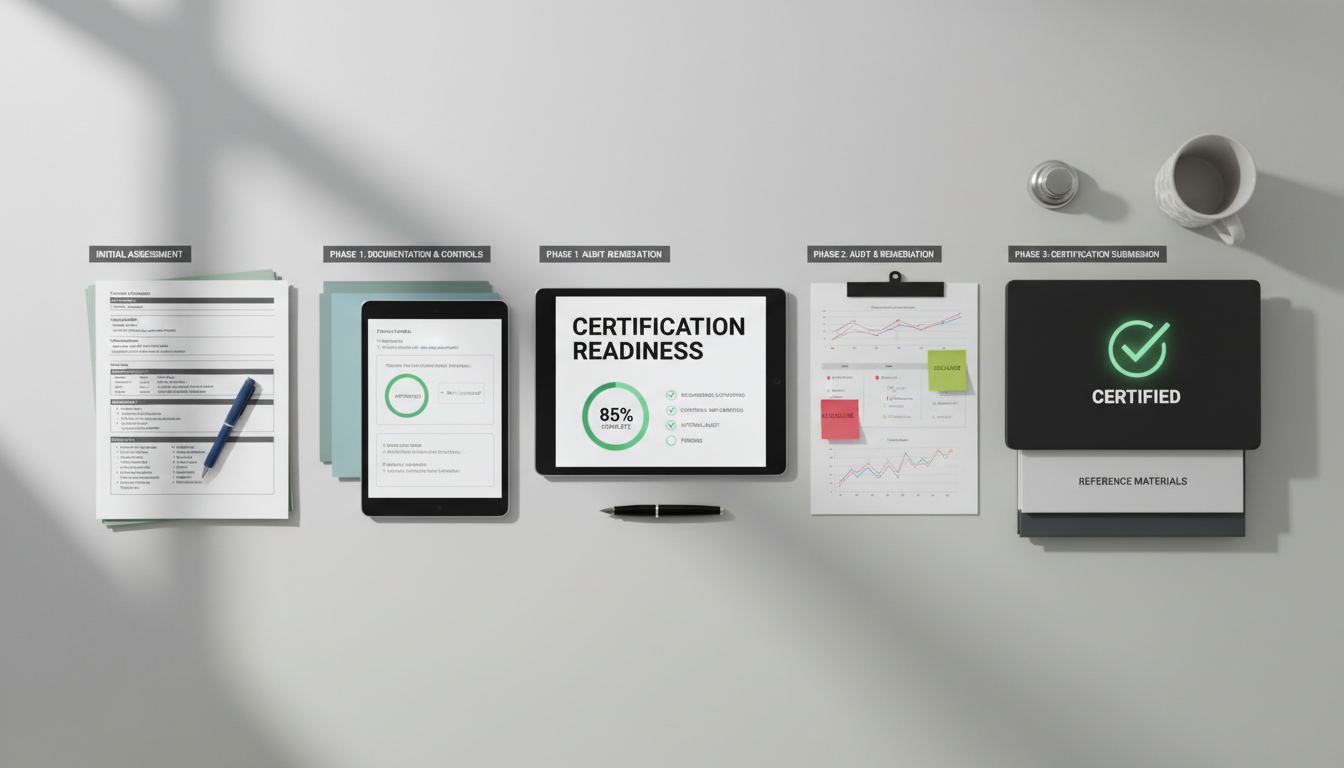
Building a robust strategy for AI regulation small business Atlanta 2026 compliance begins with visibility. Before you can address bias or international data laws, you must acknowledge the "shadow AI" likely already present in your workflows. Step Zero for any Atlanta owner is a full digital audit to identify every unrecorded tool currently used by your team. Research indicates that internal surveys often miss up to 80 percent of active AI usage; therefore, a formal discovery process is non-negotiable.
### 1. Create an AI Tool Inventory Develop a centralized spreadsheet to track every automated system. To satisfy the data retention requirements seen in states like California and Colorado, your inventory should include these five columns:
Inventory Column | Requirement Description |
|---|---|
Tool Name | The specific software, plugin, or API integrated into your workflow. |
Primary User | The individual or department responsible for the tool's operation. |
Data Categories | Documentation of all PII (Personally Identifiable Information) or sensitive data touched. |
Customer Status | A binary "Yes/No" indicating if the output is client-facing. |
Decision Impact | Does the tool influence high-risk outcomes like hiring, pricing, or credit? |
### 2. Review Vendor Contracts for Indemnification Do not assume your software provider carries the legal burden. Review your service agreements to ensure they include contractual indemnification for algorithmic errors. If a vendor cannot provide proof of an annual audit, they represent a high liability risk for your business.
### 3. Implement Conspicuous Disclosures Transparency is the most effective defense against FTC "AI-washing" investigations. Ensure all AI-generated social media content, marketing copy, and testimonials include conspicuous disclosures. This simple step can prevent per-violation fines that reach up to $10,000.
### 4. Establish a "Human-in-the-Loop" Review Process For high-stakes decisions, particularly in HR and finance, an algorithm should never have the final word. Implement a mandatory review step where a qualified employee evaluates AI recommendations before they are executed. This process provides the legal "meaningful human oversight" often required by state regulators.
### 5. Schedule Regular Compliance Training Invest in AI training for small business employees to keep your team updated on evolving disclosure rules and ethical standards. Compliance is not a one-time setup; it requires an informed workforce that can identify when a tool begins to drift from its intended purpose.
Budgeting for these requirements is essential. Atlanta firms should anticipate costs between $5,000 and $25,000 for independent third-party bias audits if they utilize automated hiring tools. While professional guidance in prompting helps maximize your AI's ROI, these audits are the necessary cost of legal protection. You can contact our Atlanta consultancy to begin your inventory and ensure your business is prepared for the 2026 regulatory landscape.
Navigating the evolving landscape of AI regulation in 2026 is essential for any Atlanta small business. Staying compliant ensures your operations remain secure and legal as local and federal standards shift. While these requirements may seem daunting, you do not have to manage the technicalities on your own. If you want expert help adapting your strategy to meet these new rules, you can learn more about our team and how we approach compliance. We focus on making these transitions seamless so you can prioritize your business growth.