
Atlanta small businesses can build AI-ready teams by implementing literacy programs that combine technical tool usage with uniquely human skills like critical thinking. Investing in comprehensive AI training for small business employees Atlanta 2026 ensures that local firms move beyond basic adoption to full operational integration; this strategy empowers staff to leverage automation while maintaining a competitive edge in the regional market.
By 2026, the initial hype surrounding artificial intelligence has shifted into a stark operational reality for Atlanta small businesses. Many local owners find their teams are eager to use new tools but lack the foundational training to move beyond basic prompts. This gap often leads to wasted software subscriptions and inconsistent results; meanwhile, larger competitors leverage sophisticated automation to outpace the neighborhood market. Bridging this divide requires more than just a list of apps. It demands a strategic investment in human capital. In this guide, we detail how to navigate federal resources like the AI for Main Street Act and implement the 10:20:70 rule for effective literacy. You will learn about local institutional programs and specific upskilling frameworks designed to transform your marketing and operations teams into high-performing, AI-ready assets.
The AI Integration Gap: Why Training is the Missing Link for Atlanta Businesses in 2026
Recent 2026 research from Goldman Sachs highlights a stark disconnect in the modern marketplace. While 93 percent of small business owners recognize the immense value of artificial intelligence, only 14 percent have actually integrated these tools into their core operations. This 79 percent implementation gap signals that the primary obstacle is no longer the technology itself. In 2026, the bottleneck is the skills gap.
For businesses operating in Atlanta, this challenge is magnified by the city's evolution as a premiere global tech hub. Local competition in high-density corridors like Midtown and Buckhead is relentless; companies in these districts are already leveraging generative models to outpace slower moving rivals. In this environment, AI literacy is no longer a luxury for specialized roles. It is a fundamental necessity for every staff member. If a team cannot effectively use advanced tools for daily tasks or AI video production, they are working at a significant disadvantage compared to firms just a few blocks away.
Generic online courses are plentiful, but they often fail to address the specific nuances of the Georgia business climate. Local leaders need more than theoretical knowledge; they require hands on, localized professional AI training and consulting that translates global technology into local growth. Navigating this transition requires specialized AI training for small business employees Atlanta 2026 to ensure the workforce is prepared for the next wave of automation. This practical approach moves beyond passive observation toward active skill building. To secure a competitive edge, the focus must shift from simply purchasing software to investing in the people who operate it. To learn how we can support your specific goals, contact our Atlanta team for a strategy tailored to your neighborhood.
Leveraging the AI for Main Street Act: New Federal Resources for Your Team
The path to bridging this literacy gap is now supported by significant federal investment through the AI for Main Street Act of 2026. This legislation has fundamentally retooled the Small Business Administration (SBA) and its partner networks, such as the Small Business Development Centers (SBDC) and SCORE, to provide direct educational support. Instead of just providing capital, these organizations now focus on capacity building through the SBA AI Readiness Framework, which evaluates technology infrastructure and workforce skills.
To access these resources, business owners should connect with the Georgia SBDC or local SCORE chapters, where AI expertise is now a searchable mentor specialty. The SBDC has structured its AI training for small business employees Atlanta 2026 into three distinct tiers:
Awareness Workshops: These sessions provide a foundational overview of generative tools and high-level strategic alignment.
Applied Training Sessions: These are hands-on technical workshops focused on practical workflows like AI video production and generative data management.
One-on-One Advisory: Confidential consultations tailored to your specific infrastructure and governance needs.
While these federal programs offer a robust starting point, they are designed as a baseline. For firms needing more intensive, customized professional AI training and consulting that integrates directly into proprietary workflows, moving beyond the SBDC framework is often necessary. You can contact our Atlanta team to learn how we complement these public resources with localized coaching tailored to your specific industry.
The 10:20:70 Rule: A Framework for AI Literacy and Adoption

To translate federal resources into daily productivity, local leaders must adopt a structured model for skill acquisition. The 10:20:70 rule provides a proven framework for high performance learning within any organization. It dictates that 10 percent of AI mastery comes from formal training; 20 percent occurs through peer feedback and mentorship; and a critical 70 percent happens through hands on, on the job experience.
Learning Component | Weight | Workplace Implementation |
|---|---|---|
Formal Training | 10% | Professional workshops and foundational theory |
Social Learning | 20% | Mentorship and feedback from AI Champions |
Experiential | 70% | Hands on prompting during daily operational tasks |
In the context of AI training for small business employees Atlanta 2026, this means formal workshops provide the spark, but the real skill is built during daily repetition. To maximize the 20 percent social learning component, Atlanta managers should designate AI Champions within their teams. These internal experts lead peer sessions and share successful prompt libraries to help colleagues troubleshoot workflows. For the 70 percent experiential portion, staff must be encouraged to use generative tools for routine tasks, such as refining hands on prompting for project proposals or AI video production. This ensures that professional AI training and consulting leads to permanent behavioral change across the firm. If you need help structuring these internal roles or identifying your champions, contact our Atlanta team for a strategy session.
Where to Find AI Training in Atlanta: Local Institutions and Programs

Atlanta offers a robust ecosystem of educational resources, ranging from academic institutions to community business organizations. For executives and decision makers, Georgia Tech’s AI for Business courses provide a high level strategic foundation. These programs focus on the long term economic implications of automation and ethical deployment; they are ideal for leaders setting the organizational vision for their firms.
Small business owners looking for community based support should look to the Atlanta Business League. Their 2026 Digital Mastery cohort is specifically designed to help minority owned and small enterprises navigate the complexities of digital transformation. Additionally, the Georgia SBDC continues to host regular webinars that cover the basics of the SBA AI Readiness Framework, offering a low barrier entry point for teams just starting out.
Provider | Target Audience | Primary Focus |
|---|---|---|
Georgia Tech | Leadership & Executives | Strategic Alignment & Ethics |
Atlanta Business League | Small Business Owners | Digital Mastery & Tool Adoption |
Georgia SBDC | General Staff | AI Readiness Webinars |
While these programs provide the conceptual groundwork for AI training for small business employees Atlanta 2026, a gap often remains between general theory and your specific operational needs. AI West Atlanta serves as the bridge between these academic resources and practical, day to day application. We take high level concepts and translate them into actionable workflows. By providing tailored professional AI training and consulting, we help teams master the nuances of AI video production and daily automation that broad courses might overlook. Contact our Atlanta team to align these local resources with a customized roadmap for your staff.
Role-Specific AI Upskilling: From Marketing to Operations
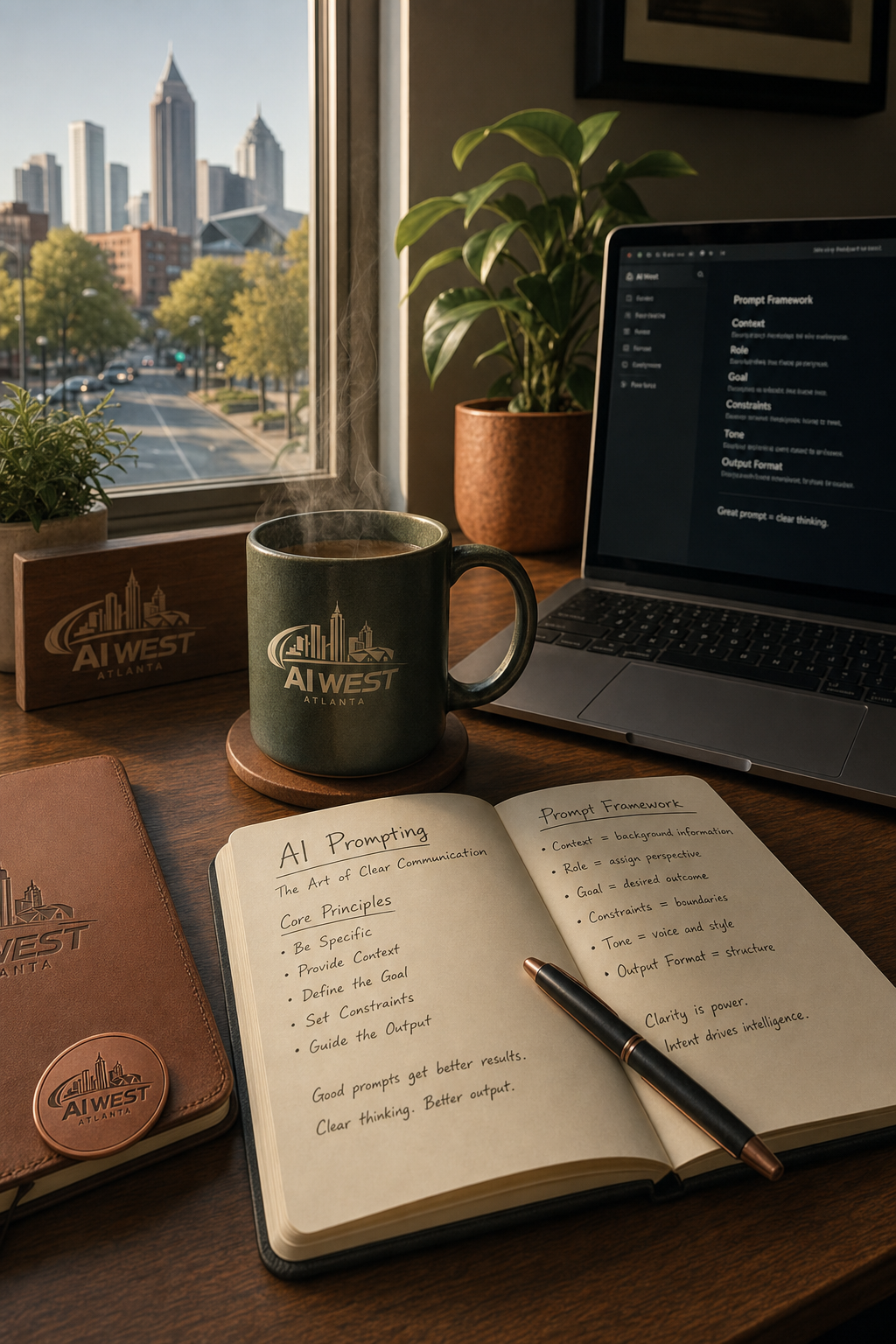
While foundational knowledge is vital, the highest ROI on AI training for small business employees Atlanta 2026 occurs when the curriculum is tailored to specific job functions. Generic advice often fails to account for the unique pressure points of different departments. Marketing teams, for instance, should prioritize mastering AI video production and generative social media workflows. By utilizing advanced prompting techniques, a single creative in an Atlanta firm can produce high quality video assets that previously required an outside agency. This upskilling allows local brands to maintain a consistent, high frequency presence across digital channels while significantly reducing production costs.
Operations and administrative teams require a different set of competencies. Data from Business.com indicates that administrative roles see the largest time gains from AI implementation, often reclaiming hours each week through automated scheduling, document synthesis, and email management. For these roles, training should focus on complex automation and high precision professional AI training and consulting to streamline recurring workflows. The objective is to move beyond simple chat interfaces toward integrated systems that handle the heavy lifting of data entry and report generation.
Department | Primary Training Focus | Key Efficiency Goal |
|---|---|---|
Marketing | AI video production & Content Gen | Brand Velocity & Creative Output |
Operations | Task Automation & Process Logic | Administrative Time Savings |
Finance | Predictive Analytics & Reconciliation | Error Reduction & Forecasting |
Practical implementation requires more than just knowing a tool exists; it requires knowing how to manipulate that tool for a specific outcome. Training must be grounded in the actual software your team uses every day. If your staff is currently using AI in a vacuum, you can contact our Atlanta team to develop a departmental roadmap that aligns their new skills with your firm's specific operational targets. This targeted approach ensures that every hour of training translates directly into measurable business performance.
Building Trust: Overcoming the 2026 AI Trust Gap
Effective deployment of new technology relies entirely on cultural buy-in. Data from Business.com highlights a persistent trust gap where managers prioritize efficiency while staff members worry about displacement. Closing this gap is a prerequisite for successful AI training for small business employees Atlanta 2026. Leadership must establish a transparent AI policy that addresses two primary concerns: job security and data privacy. This policy should clearly state that AI tools are being implemented to handle the 30 percent of a role's tasks that are repetitive or administrative, such as data entry or the technical heavy lifting involved in AI video production.
The 30 percent rule frames AI as an augmentation tool rather than a replacement. By automating the mundane, employees are freed to focus on high level human creativity and strategic problem solving. To solidify this trust, involve your team in the tool selection process. When a department helps evaluate which platform best fits their workflow, they transition from passive users to active stakeholders. This collaborative approach, paired with professional AI training and consulting, ensures that the transition feels like a promotion in capability rather than a threat to their livelihood. If you are unsure how to draft these internal guidelines or communicate the transition, contact our Atlanta team to help align your operational goals with your team's professional growth.
How to Start Your Team Training Journey with AI West Atlanta
Transitioning from policy to practice requires a partner who understands the local economic landscape. While federal resources and national webinars offer a valuable foundation, they often lack the granular specificity required to transform a complex workflow. Engaging with a local consultancy ensures that AI training for small business employees Atlanta 2026 is not just a theoretical exercise but a practical integration into your daily operations. We provide in person workshops across the metro area, from the creative studios in the Old Fourth Ward and the West End to the corporate offices in Sandy Springs.
Our approach at AI West Atlanta bridges the gap between general AI literacy and proprietary business needs. We specialize in professional AI training and consulting that addresses the unique challenges of your industry. For companies looking to dominate digital spaces, our expertise in AI video production provides a direct path to scaling content without increasing overhead. This localized support allows for real time troubleshooting and hands on prompting exercises that a pre recorded video course cannot replicate.
The most effective roadmap for an Atlanta business involves a three step progression:
Assess Readiness: Use internal audits to identify which 30 percent of tasks are prime for augmentation.
Utilize Federal Resources: Take advantage of the AI for Main Street Act's offerings through the SBDC for baseline literacy.
Implement Custom Workflows: Bring in professional trainers to develop custom prompt libraries and departmental automation.
This structured approach moves your firm beyond experimentation into full, competitive deployment. To begin designing a curriculum that reflects your team's specific needs and neighborhood context, contact our Atlanta team for a consultation.
Building an AI-ready team is not just about technology; it is about empowering your local workforce to thrive in a changing landscape. By investing in training now, your Atlanta business can gain a significant competitive edge by 2026. If you find this transition challenging or simply want expert help navigating the complexities of implementation, we are here to support your goals. You can learn more about us and our commitment to local small businesses to see how we help teams evolve.